Keynote Speakers
Mine Closure 2024
26–28 November 2024 | The Westin Perth, Western Australia
Opening Speaker

Darren Murphy
Mine Closure Consultant/Mine Repurposing Advocate
Murcox Post Mining Services
Darren Murphy is a fellow of the Environmental Institute of Australia and New Zealand, a certified environmental practitioner and founding chairperson of the Closure Planning Practitioners Association. He holds a master’s degree in zoology from The University of Western Australia, and with 35 years of experience has been at the forefront of change and improvement in mine closure planning within industry, consulting and stakeholder organisations.
Darren’s experience includes pioneering the use of landscape function analysis to assess rehabilitation performance, establishing robust cost-estimation systems to improve closure provisions, bringing together multi-disciplinary teams to undertake some of the earliest closure studies, advocating for regional repurposing opportunities, and working with international peers to develop mine closure and reclamation standards for the International Standards Organisation.
Throughout his career, Darren has strived to build capacity and capability within the organisations and teams around him, often challenging the status quo and leading change by example. Seeing the need for further change, Darren has recently turned his efforts to working with Traditional Owners and post-mining stakeholder organisations to help pull through better mine closure and transition outcomes.
Opening address title: Reconciling mine closure
Conversation Speaker

Brad Welsh
Chief Executive Officer
Energy Resources of Australia
Speaker: Brad Welsh, Chief Executive and Managing Director, Energy Resources of Australia
Interviewer: Dr Guy Boggs, Chief Executive Officer, CRC TiME
Abstract
What is the value of a relationship? Over the life of mine, the relationship between Traditional Owners and a mining project will evolve, with decisions made that navigate emerging opportunities and risks. Mines are a temporary use of the land for a culture that has over 65,000 years of custodianship and rights. How can a direct relationship with Traditional Owners deliver mutual value and certainty over mine closure? If the Traditional Owners are expected to take custody of mined land after closure, why don’t we invest in the commercial capability of Traditional Owners over the mine life? Wouldn’t this deliver more certainty, clarity and opportunity for mined land? Navigating these dynamics requires investment by companies and governments in real capability of host communities. But what does capability look like and why is it critical to be underpinned by a trusting and transparent relationship? Why are we getting to the end of a life of mine with an unmet expectation from host communities about what mining was to deliver?
This interview will explore these questions with Brad Welsh, a leader working with one of the world’s most significant mine closure projects. Drawing on his experience, the discussion will explore the characteristics of capability development and life of mine investment, along with good relationships and why these factors make good business sense, de-risking projects and building tangible and intangible value.
Invited Speaker

Peter Harvey
Global Head
Rio Tinto, UK
Peter is a passionate advocate for responsible mining practices and creating a positive environmental and social legacy. He leads Rio Tinto’s global closure team, ensuring sustainability is considered throughout a mine’s life cycle, from design and construction to operation, closure, and transition.
He joined Rio Tinto in 1998 as a consultant and has since held various positions across Exploration, Health, Safety, Environment & Communities, Projects, and the former Energy & Minerals Product Group.
Prior to Rio Tinto, Peter established and managed companies across diverse sectors including oil and gas, military, remote travel, and exploration, demonstrating his entrepreneurial spirit. He has lived and worked in the UK, Canada, and Botswana, offering a valuable global perspective.
Peter holds a Bachelor of Science in Environmental Science from Southampton University, UK, and a Master of Science in Occupational Psychology from the University of Leicester, UK. This unique combination of qualifications positions him to effectively manage closure projects, balancing environmental responsibility with employee wellbeing. Peter leverages his extensive network within Rio Tinto and his passion for people and positive impact to create successful closure solutions.
He is based in London, UK with his family. Outside of work he prioritises a healthy work–life balance, enjoying time with family, outdoor activities like hiking and gardening, and pursuing hobbies like woodworking and maintaining his classic Land Rover.
Keynote Speakers

Dr Emma Gagen
Acting Director Environment
ICMM
Emma joined the International Council on Mining and Metals (ICMM) in 2022 as the lead for the mine closure and water work programs. Prior to joining ICMM, Emma was lead technical advisor in the Office of the Queensland Mine Rehabilitation Commissioner where she led the research program on best practice mine rehabilitation.
Before joining government, Emma spent 10 years in post-PhD research positions as an environmental microbiologist. Her research has focused on biogeochemical processes, re-forming surface crusts in iron ore areas, addressing topsoil deficits in coal mine rehabilitation and other microbe–mineral interactions that are relevant for biotechnology and environmental sustainability in the mining industry. Emma has lectured in environmental management for mining and has provided environmental microbiology consulting for the mining and agriculture sectors.
Emma has a BEnvSc (Hons I) and a PhD in microbial ecology from The University of Queensland, Australia. She is passionate about sustainability in the mining and agriculture sectors.
Mining and metals operations, and the communities and regions that host them are inextricably linked. In a world experiencing significant disruptions globally and locally due to climate change, natural disasters, pandemics, geopolitical tensions and economic transitions, the mining and metals industry can play an important role in strengthening social and economic resilience. Mine closure is a significant disruption that every mining region will experience. With planned mine closures around the world expected to increase over the next decade, the industry has a unique opportunity to improve closure performance and support social and economic transition within mining regions.
The International Council on Mining and Metals’ (ICMM) Integrated mine closure good practice guide (2019) sets out the key elements underpinning successful transition: integration of closure considerations into the mining lifecycle, closure planning, closure-specific stakeholder engagement, implementation of closure activities, post-closure monitoring, maintenance and relinquishment. Most of these elements start long before operations cease, and they are iterative in nature. Nonetheless, successful closure and the realisation of post-mining futures for mining regions remain challenging. Overcoming the barriers to successful post-mining regional transitions will require collaborative, multi-stakeholder approaches that are self-sustaining and designed for longevity.
This presentation will give an overview of work the ICMM is doing to support closure good practice across the industry. This includes understanding multi-stakeholder approaches that support asset transitions across diverse global contexts, as well as leveraging the need for urgent action on nature, to realise post-mining outcomes that benefit people and the planet.

Professor Gawen RT Jenkin
Professor of Applied Geology
University of Leicester, UK
Gawen is a geochemist and mineral deposit geologist with 40 years’ experience researching critical minerals. Over the last 10 years, he has developed a new line of research applying novel environmentally friendly solvents to extract metals from primary ores and secondary waste streams. Gawen is director of the Centre for Sustainable Resource Extraction at the University of Leicester and the UK lead for the GBP 2M PROMT project – Philippine Remediation of Mine Tailings. Gawen is a board member for the Mineral Processing and Extractive Metallurgy Division of the Institute of Materials, Minerals and Mining (IOM3) and Fellow of the Society of Economic Geologists. He also promotes science communication and was awarded a Distinguished University Teaching Fellowship in 2009.
Tailings storage facilities pose environmental hazards, and failure could cause contaminated materials to be released affecting people and ecosystems. Conversely, tailings are significant resources of unrecovered metals, especially in older facilities produced using less-efficient mineral processing. The already finely ground material makes remining and reprocessing of tailings appealing, but challenges include the risk of damaging the structural integrity of the tailings, handling costs and the potential for release of contaminants. Reprocessing in situ is a potential alternative.
The Philippines Remediation of Mine Tailings (PROMT) is a joint UK Natural Environment Research Council and Philippine Department of Science and Technology funded project that involves over 40 UK and Philippine researchers working together with mining companies to develop new science and sustainable technologies for in situ reprocessing and remediation of mine tailings. This state-of-art project aims is to employ novel solvents to recover metals, stimulate soil development and enhance plant growth, thereby facilitating pathways for new productive land uses.
An overall successful, economic and safe in situ process requires five key components:
- A solvent that is effective, safe and cheap.
- Fluid flow should be feasible, can be monitored and ideally controlled, and solvent and metals can be recovered.
- It should have neutral or, ideally, positive impacts on the ecosystem, including microbiota, flora and sustainable land use pathways.
- It must be demonstrated beyond lab scale.
- The necessary social licence to operate must be obtained, especially locally.
This presentation will give an overview of how PROMT is developing and demonstrating all these aspects, with a case study on a copper-rich tailings facility in the Philippines.

Dr Peter Whitbread-Abrutat
Managing Director
Future Terrains International, UK
Pete is a mining-environmental and sustainability specialist through his niche consulting company, Future Terrains International, which he founded to address the global challenge of degraded lands. He is the co-author of the recently published, not-for-profit book, 102 Things to Do with a Hole in the Ground, which he also conceived, developed and project managed.
He was deeply involved in the early days of the Eden Project’s creation and remained part of the Team for many years where he was instrumental in establishing and managing Eden’s engagement with the mining industry, including Eden’s former partnership with Rio Tinto, which – amongst other things – led to the 2009 book 101 Things to Do with a Hole in the Ground!
Pete is an Eden Associate, a Chartered Environmentalist and an IEMA Lead Environmental Auditor and draws on over 30 years’ international experience in mining-ESG and sustainability, mine closure and post-mining regeneration and international development in developing and conflict-affected countries. He is a Churchill Fellow for his 2011 travelling research project, Exploring World Class Landscape Restoration. Pete earned his PhD from Camborne School of Mines (University of Exeter) in revegetating mine wastes in the 1990s, and a Natural Sciences degree from the University of Cambridge in the 1980s.
With substantial progress in the practice of closing mines over the last three decades or so largely driven by better regulation and third-party standards, it is now technically achievable to close a mine to leave behind a ‘safe, stable and non-polluting’ site in harmony with regulatory requirements (long-term management requirements notwithstanding). However, such limited vision often does little to realise possibilities for rebuilding broader ecological integrity and enhancing people’s lives for the long term – particularly those in mining communities.
Mining sector practices – and policies – need further refinement to address such challenges, especially given the inevitable large-scale mine closures planned over the next couple of decades, and growing expectations for the responsible mining of critical metals and minerals to supply the green industrial revolution.
Reflecting on over 30 years of research and the stories presented in the recently published not-for-profit book 102 Things to Do with a Hole in the Ground, this paper will highlight how such challenges have been turned into pragmatic opportunities as illustrated with examples from around the world. It posits the notion that – arguably – there are few if any new problems in the mine closure/transition and post-mining regeneration space; bespoke solutions have been developed that address them by balancing environmental, social and financial outcomes – somewhere – by mining companies, government, communities and/or unexpected actors. The main challenges to converting such liabilities into new opportunities are, therefore, of perspective, communication and will.
Building on the existing library of excellent mine closure good practice technical guidance, the paper will discuss further advances for doing more with our holes in the ground based on empirically derived, generic findings from the first-hand analysis of very many hundreds of projects, including some non-mining examples too.
Welcome to Country Speaker
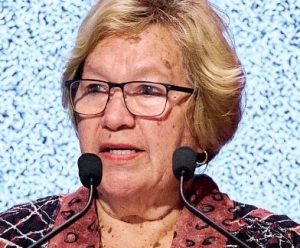
Freda Ogilvie
A Whadjuk/Ballardong matriarch, with National and State responsibilities, including participation and involvement on the City of Fremantle, Elders Committee and the Access and Inclusion Committee. In addition. involvement on Education and Early Childhood Education committees in Western Australia and the Australian Government.
Speaking up and speaking out on matters of family, education, health, domestic violence and community services is my role, responsibility and accountability to myself and the privileges I have attained throughout my life.